Pointless Audio / Plugins / Compatto
P3Combo organ, 1960s
Compatto
From elevator music to the grimiest basement.
Reedy voices, vibrato, percussion and an onboard spring tank. Three knobs — Bite, Patina, Spring — take it from the showroom floor to a basement in 1966.
- Machine
- An Italian combo organ of the 1960s
- Version
- v1.2.6
- Runs on
- VST3 · CLAP — macOS, Windows, Linux. AU on macOS. AAX for Pro Tools on macOS and Windows
- Latency
- None: 0 samples (an instrument with no look-ahead)
- License
- Pay once. No iLok, no account, no subscription
Or all six for €49, Compatto included. Get all six · Full refund within 14 days if you don’t keep it.
5.0 out of 5, from 46 ratings on Gumroad, free weeks included
Data platev1.2.6
- Voices
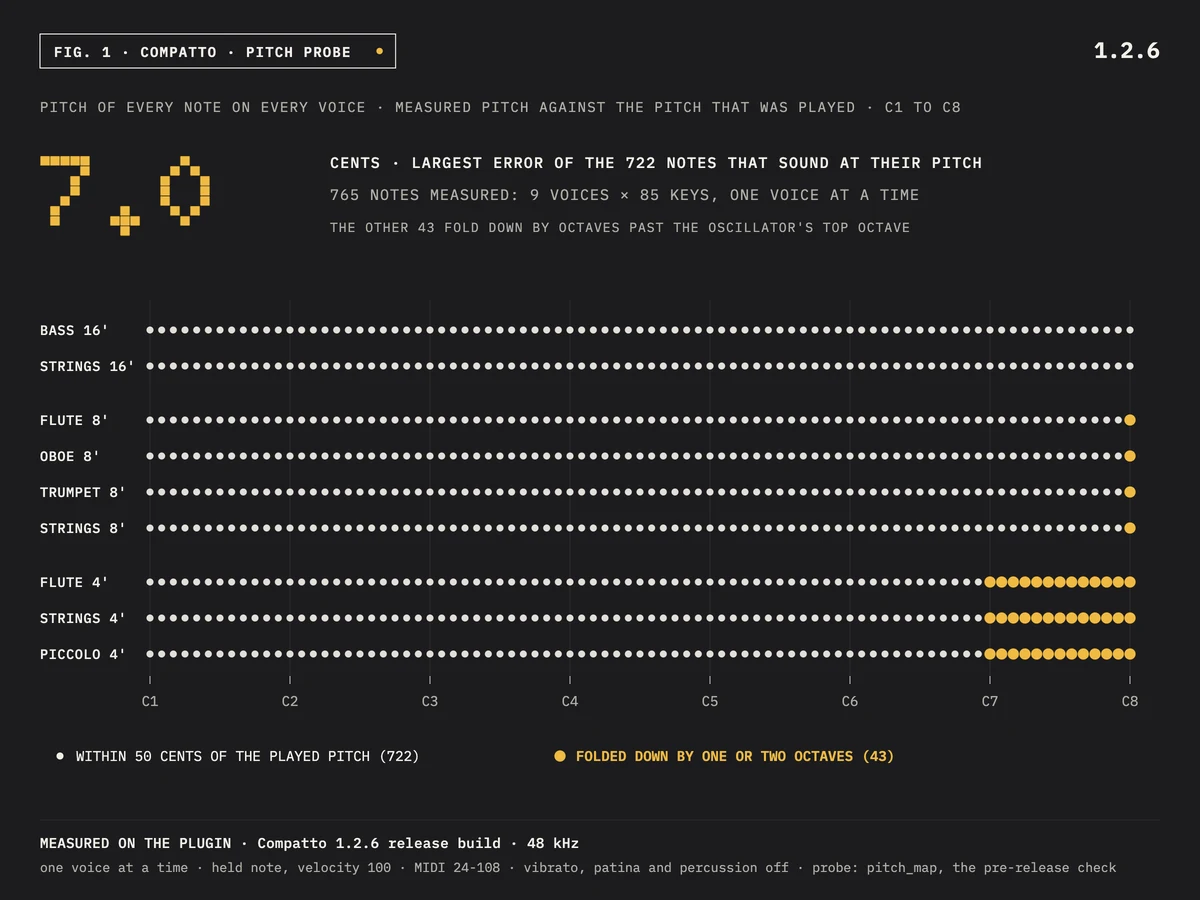
- nine, three registers
- Oscillators
- twelve, divide-down
- Tuning spread
- 3.5 cents
- Vibrato
- 0.5–10 Hz
Values from the manual

Signal path · from the manual
- A1OSCILLATORS
- A2VOICES
- A3BITE
- A4PATINA
- A5SPRING
- J1OUT
Hear it
The same notes with two settings, level-matched. Switch between them while it plays.
Organ
Baroque intro, clean against combo
The organ on its own, same notes. Clean: one stop, Flute 8', character at zero. Combo: Flute 8' and Strings 4' with percussion on the attack, a little BITE and spring: the sixteenths stand out and shine.
Organ
Nocturne, clean against worn
The organ on its own, same notes. Clean: Flute 8' alone, no vibrato, character at zero. Worn: Flute 8' and Strings 8', slow vibrato, worn tape (PATINA) and spring: held chords waver and warm up.
Organ
Garage organ, clean against dirty
Same notes, two Compatto settings. Clean: one stop, Flute 8', character at zero. Dirty: four stops, BITE and TONE up, worn tape.
Organ
Organ, clean against lived-in
Same notes, two settings. Clean: Flute 8' alone, no vibrato, character at zero. Lived-in: Flute 8' and 4', vibrato, spring and worn tape.
What people say
Great sound and character, low CPU, beautiful UI.
This organ is a lot of fun. I like it.
What it does
Nine voices, three registers
Pull the voice tabs to build a registration across 16’, 8’ and 4’ — reedy, buzzing and faintly out of tune, the way the old master oscillators drifted.
It plays like the real thing
A polyphonic MIDI instrument: percussion click for the attack, vibrato that soaks the whole sound, an expression input for a swell pedal.
Bite, Patina, Spring
Three CHARACTER knobs decide how much of the last sixty years the instrument carries — showroom-clean at one end, basement-worn at the other. We modeled the organ, and the sixty years since.
An onboard spring tank
The kind that came bolted into the lid — short and boingy, and it sits behind a reedy voice.
Where it works
For a garage part, bring BITE up and turn percussion on. For a held chord, bring BITE down and try slow vibrato with the spring open. The voice tabs let you build the registration yourself.
29 parameters, 8 presets
From Combo to Basilica to Aurora — eight registrations with their own wear and their own room.
The heritage
The transistor combo organ arrived in the early 1960s: compact, portable, affordable, and built down to a price. It generated its notes by dividing down a master oscillator. The division is exact — it locks the registers together and gives the tone its square, buzzing edge. The oscillator itself was never quite true, even new, so the organ never quite settled in tune. It buzzed, clicked and shimmered in a way the church-sized instruments never did.
It turned up everywhere the money was tight and the stage was small: beat groups, garage bands, lounge acts, television variety shows. That thin, reedy, vibrato-soaked tone became a signature of 1960s pop and garage rock — and, later, of anyone chasing a warm, worn, slightly wrong sound.
Compatto models the character of that instrument — the divide-down voices, the vibrato, the percussive key click, the onboard spring — and adds the wear the years put on it. It isn’t a copy of any one make or model. It’s the sound of the class. Built to be cheap. Impossible to kill.
Farfisa is a trademark of its respective owner. Pointless Audio is not affiliated with, endorsed by, or sponsored by Farfisa. Product names are used solely to describe the class of instrument that inspired this plug-in.
Specs
- Formats
- VST3 + AU + CLAP + AAX
- Platforms
- macOS (Universal) + Windows 10+ (VST3 + CLAP + AAX) + Linux x86_64 (VST3 + CLAP)
- Version
- v1.2.6
- Latency
- None: 0 samples (an instrument with no look-ahead)
- License
- Perpetual — no account, no iLok, no subscription
- Manual
- Online manual · PDF
What’s new in 1.2.6
For those who have it
1.2.6 — Pro Tools (AAX), on Mac and Windows; 6 new factory presets by Andi, a beta tester. Two safeguards against a note that keeps sounding after a repeated note-on, or when no key is held.
How to get it
-
01
Get it on Gumroad
Checkout runs on Gumroad, which handles payment and VAT. The download link lands in your inbox.
-
02
Download the zip
Inside: VST3 + AU + CLAP + AAX builds and the manual as PDF. macOS builds are signed and notarized. Linux is a separate tar.gz.
-
03
Install, rescan, done
macOS: run the signed installer in the zip and pick your formats. Windows: copy the plugin into your plugin folder. Linux: extract the tar.gz, copy the .vst3 folder to ~/.vst3 and the .clap file to ~/.clap; README.txt inside has the steps. Rescan in your DAW. No account, no activation. The manual has the exact paths for macOS and Windows.
Questions
How do I install it?
On macOS, run the installer inside the zip: it is signed and notarized, and lets you pick the formats. On Windows, copy each format into your plugin folder; the AAX goes in C:\Program Files\Common Files\Avid\Audio\Plug-Ins\. On Linux, extract the tar.gz and copy the .vst3 folder to ~/.vst3 and the .clap file to ~/.clap, as README.txt inside the package explains. Then rescan in your DAW. The manual has the exact paths for macOS and Windows; Linux is in README.txt.
Do I need an account, a dongle, or an internet connection?
No account, no iLok, no subscription, no activation. Once installed it runs fully offline.
Does it work in my DAW?
Any host that loads VST3, AU, CLAP or AAX: Pro Tools, Logic Pro, Ableton Live, Reaper, Bitwig, Cubase, Studio One, FL Studio and friends. In Pro Tools it runs as a real-time insert, on Mac and Windows; there is no AudioSuite version.
Does it run on Linux?
Yes: x86_64, VST3 and CLAP, no AU. It needs glibc 2.38 or newer (Ubuntu 24.04+, Debian 13, Fedora 39+); Ubuntu 22.04 and Debian 12 are too old. The CLAP build is experimental. Same sound engine as the macOS and Windows builds. If something doesn’t load or sounds wrong, write to [email protected].
Windows says the file is from an unknown publisher.
Windows builds are not code-signed yet, so SmartScreen may warn on first run. The zip you download from Gumroad is the zip we built — choose “Run anyway” or unblock the file in Properties.
Refunds?
There is no demo version. Buy it, use it on your own music for 14 days, and if you don’t keep it, write to [email protected] for a full refund. The refund goes through Gumroad.
Have updates been free?
So far, yes: every update has been free, delivered through the same Gumroad link.
I got it while it was free. Is it still mine?
Yes. Anything you downloaded before 26 October stays in your Gumroad library, with its updates.
€24
Pay once. No iLok, no account, no subscription. There is no demo version: use it on your own music for 14 days, and if you don’t keep it, you get a full refund.
More machines
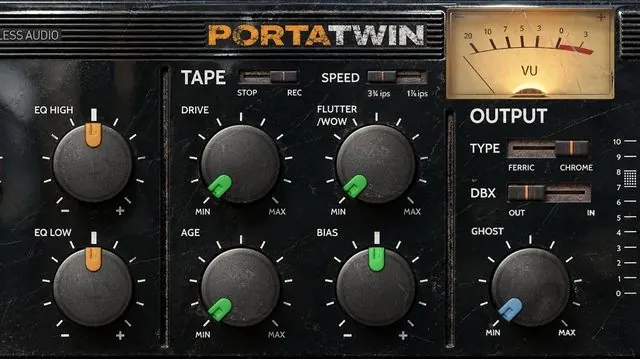
All six for €49PortaTwin
Four-track, 1987
The preamp clips early. The tape wears out.
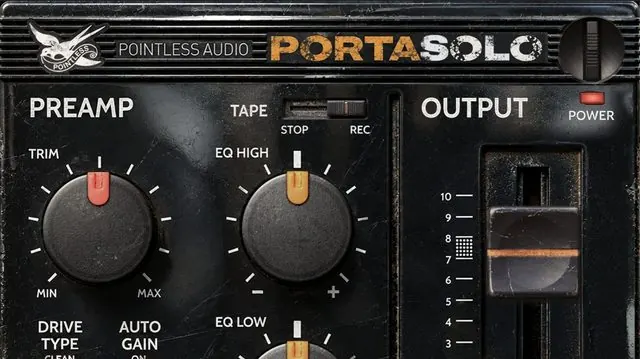
€29BuyPortaSolo
One channel of PortaTwin
One channel. The tape, set once. Free.
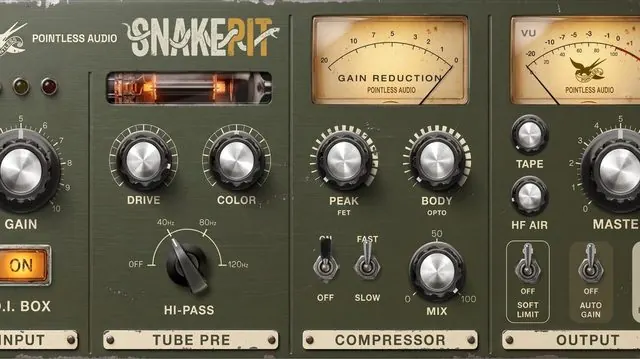
FreeDownloadSnakePit
Tube strip, our own
Detroit-inspired channel strip, from the DI to the output transformer.
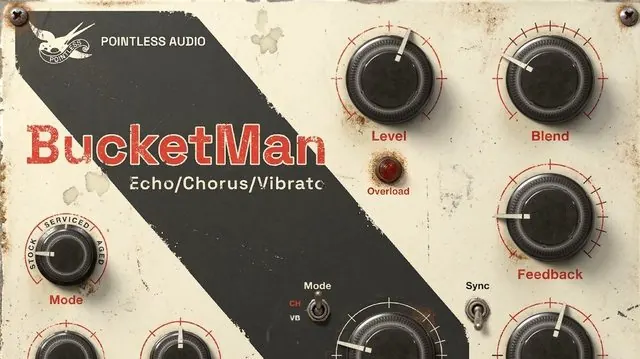
€24BuyBucketMan
BBD pedal, 1980
Bucket-brigade delay and chorus, from soft repeats to runaway feedback.
€19BuyFerrotank
Spring tank, 1961
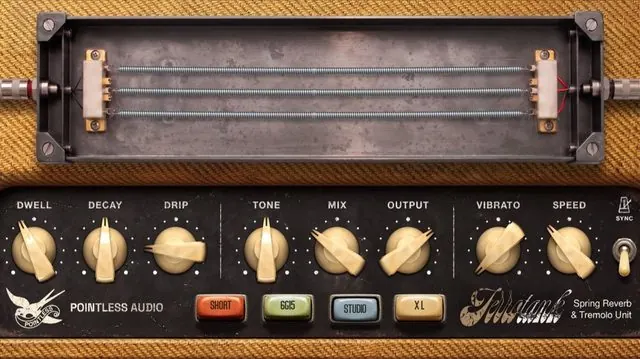
Strike, pluck or damp the springs, or play them from a MIDI key.
€19BuyAlphaRail
Synth preamp, 1971
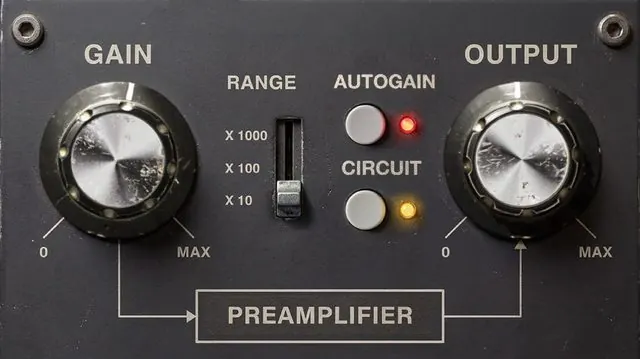
The 2600’s preamp, rebuilt from the schematic. Free.
FreeDownload